
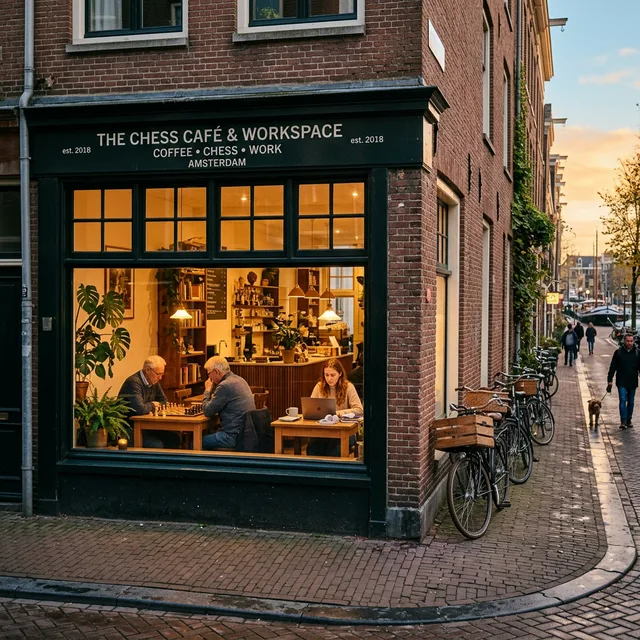
Amsterdam is often described through its busiest images. Crowded canals, long lines, fast moving bikes, packed shopping streets, and a constant flow of visitors moving from one landmark to the next. That side of the city is real, but it is only one side of Amsterdam.
A short distance away, De Pijp offers a different feeling. It is still lively, still recognisably Amsterdam, and still full of movement, but the rhythm is not the same. The area feels more lived in. It feels more local. Instead of giving people the sense that they need to keep moving, it often invites them to slow down a little. That difference is part of what makes De Pijp stand out. For visitors, it can feel like a more relaxed way to experience the city. For locals, it often feels like a neighbourhood that still holds on to its own routine.
A different pace
The city centre can sometimes feel like a place built around momentum. People arrive with a plan, move quickly, take photos, check maps, and continue to the next stop. Even when the atmosphere is enjoyable, the pace often stays high.
De Pijp usually feels more balanced. There is movement, but not always the same pressure. People sit down longer. They walk without as much urgency. Conversations seem to stretch on a bit more. The streets feel active, but not always rushed.
That slower pace changes the experience of being in the neighbourhood. Instead of just passing through, people are more likely to spend time there. They stop for coffee, sit in a park, meet friends, or take a quiet break in between other plans. The area feels less like a checklist and more like a part of daily life.
A neighbourhood with its own identity
One reason De Pijp feels different is that it has a strong identity beyond tourism. It is not only a place people visit. It is also a place people live in, work in, and return to again and again. That creates a different atmosphere from areas that are shaped mainly by short visits.
You can notice it in small ways. The streets feel more personal. The routines feel more familiar. There is a mix of people who are clearly part of the neighbourhood and people who are discovering it for the first time. That combination gives De Pijp a kind of energy that feels active without becoming overwhelming.
This matters because neighbourhoods are not defined only by architecture or location. They are also defined by how people use them. In De Pijp, the mix of everyday life and city movement feels more even. That gives the area a more grounded atmosphere.
Space to pause
The city centre often gives people a lot to see, but not always much room to pause. In busy parts of Amsterdam, the experience can become about navigating the crowd as much as enjoying the place itself.
De Pijp often offers a more comfortable middle ground. It still has the life and density of the city, but it also gives people moments to breathe. There are quieter corners, local spots, and everyday routines that make the area feel less performative and more natural.
For many people, that is what makes a neighbourhood memorable. It is not only what they saw there, but how they felt while they were there. A place that allows people to reset for a moment often leaves a stronger impression than a place that simply demands attention.
More local, less rushed
This does not mean De Pijp is hidden or silent. It is one of the most well known areas in Amsterdam for a reason. But the type of attention it gets feels different. It tends to draw people who want to spend time in a neighbourhood, not only pass through one.
That difference creates a more local tone. There is usually a stronger sense that businesses are part of the area rather than simply serving a stream of one time visitors. Places feel more connected to the street they are on, the people around them, and the rhythm of the neighbourhood itself.
That is often why people describe De Pijp as more comfortable, more personal, or easier to settle into. It still feels central and connected, but it does not always carry the same pressure as the busiest parts of the city.
A better setting for small moments
Some parts of a city are memorable because they are dramatic. Others are memorable because they make ordinary moments feel better. De Pijp often belongs to the second category.
It is a place where a short walk can feel enjoyable without needing a plan. Where meeting someone feels easy. Where sitting down for a while feels normal rather than like a pause in a crowded schedule. Those small moments are easy to overlook, but they are often what shape a person's impression of a neighbourhood.
This is also why people who spend time in De Pijp often return to it. The area is not only visually recognisable. It is comfortable to be in. That comfort is difficult to manufacture, and it tends to be what gives a neighbourhood lasting appeal.
Why that difference matters
When people think about Amsterdam, they often imagine the city centre first. But Amsterdam is made up of different atmospheres, and those differences matter. Not every visit needs to be fast, crowded, or built around major landmarks. Sometimes what people remember most is finding an area that feels more natural to spend time in.
De Pijp offers that alternative. It gives people access to the energy of Amsterdam without always feeling swept up in it. It feels social without being too intense. It feels lively without being constantly hurried. It feels like a part of the city where everyday life is still visible.
That is part of what makes the neighbourhood stand out. It offers a version of Amsterdam that feels a little calmer, a little more local, and often a little easier to enjoy at your own pace.
For people spending time in the area, that can make all the difference. Whether someone is walking through for the first time or returning to familiar streets, De Pijp often feels less like a backdrop and more like a neighbourhood with its own way of moving.
And in a city that is known for constant movement, that difference is worth noticing.